

Damp and leaks at home: causes and what to do
Last reviewed: 10 October 2026.
Quick answer
To resolve damp, first identify where water comes from: the ground, condensation, rain or a pipe leak can produce similar stains. Record locations, dates and conditions, protect against risks and do not paint before assessing the source. Measurements need context and specific tests may be required. Who maintains or pays depends on the element, cause, contract and cover; the room containing the stain does not automatically determine liability.
Record the pattern and protect the home before diagnosing
Rising damp, condensation damp and water penetration describe different mechanisms. An installation leak is another water source with potentially similar symptoms. Before choosing a product or company, gather location, development and condition data. Treating only the stain can improve appearance while damage continues.
Prioritise safety with water near electrics, deteriorated ceilings or falling material. Avoid dangerous areas and request appropriate intervention. Stopping a leak or protecting belongings should not wait for a report, but document actions and findings where possible. Do not retain active water entry for evidence if it can safely be limited.
Episode diary
Record room and point, date, visible extent and known conditions. Record rain, shower or appliance use and recent intervention as facts, rather than confirmed causes. Photograph from a similar position and keep originals. Efflorescence can indicate salt movement, but does not itself identify the water source.
| Information | How to record it |
|---|---|
| Appearance | First observation date and later episodes |
| Location | Simple plan and overview photograph |
| Development | Same point and visual reference |
| Conditions | Rain or known use without automatically inferring causation |
| Interventions | What happened, when and by whom |
| History | Documented repairs and responses |
Do not use colour or smell as sole evidence. A dry stain can reflect an old episode or intermittent water input. Mould can be encouraged by moisture with several factors; cleaning does not explain which. Avoid unsafe scraping or dispersal of material and request professional guidance if cleaning or exposure needs specific attention.
Ask about previous repairs and request documents. For a bought or rented home, also keep initial condition records and communications. If another property is damaged, coordinate access and history. Investigation improves when both sides of the enclosure can be related, without blaming someone solely through location.
This stage produces a map of symptoms and outstanding questions. That information guides the visit and lets you ask which test would distinguish hypotheses, rather than accepting the same commercial solution for all damp.
Rising damp and ground water: indications and limitations
Capillarity involves water moving through material pores and can appear in lower wall areas touching the ground. Salts and paint deterioration provide indications, but a nearby leak or lateral penetration can also wet that zone. Do not diagnose from a fixed stain height or simply being on the ground floor.

Assess ground contact, outside level differences, drainage, waterproofing and history. A basement can receive water through pressure or junctions, through a mechanism different from capillary rise. If wall composition or water level is unknown, the report must state that limitation. The solution requires understanding the existing system, rather than just its finish.
Useful information
- Location of buried walls or walls touching the ground.
- Rain episodes and their relationship with exterior runoff.
- Pipe routes and leak history.
- Documented barriers or previous repairs.
- Material type, finishes and salts.
- Comparable readings at different points and heights.
A moisture meter can provide comparative readings affected by material, salts or metal elements. The figure is not a universal percentage without knowing the method and substrate. Recording location and conditions allows comparison; one reading does not establish the mechanism or complete extent.
Do not assume injection, waterproof paint or wall lining is always the solution. Intervention must consider continuity, junctions, compatibility and drying potential. Covering without investigation can conceal development and hinder moisture escape. If a barrier is proposed, ask where it acts and which water routes remain outside it.
Repair can also include removal of damaged finishes and reinstatement after suitable drying conditions. Those consequences must not be confused with eliminating the water input. Request a quotation separating diagnosis, source treatment, restoration and verification.
For an Alicante ground-floor home with stains and salts, do not infer that the marine environment explains everything. It can affect materials and exposure, but the specific source must be assessed. Use context to form hypotheses, rather than replace evidence. Works affecting foundations, retaining elements or concealed components may require a suitable specialist and design.
Condensation: relate indoor conditions, surfaces and ventilation
Condensation occurs when vapour encounters conditions allowing it to become water. It can appear on cold surfaces, junctions or behind furniture, but those locations can also have water penetration. Diagnosis relates indoor conditions, surface temperature, insulation and ventilation without automatically blaming the occupier.
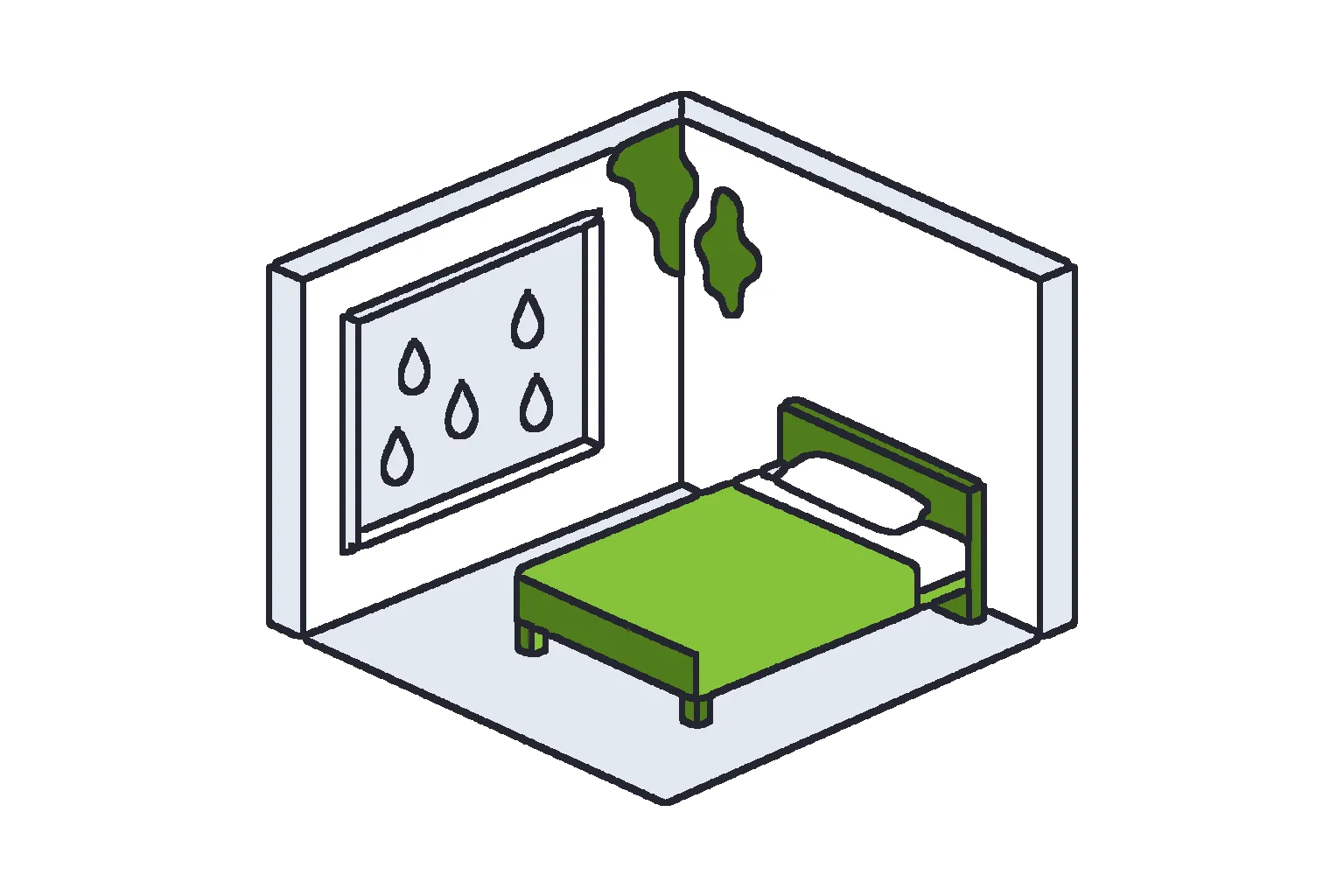
One relative humidity reading does not represent the entire winter or usual use. Monitor a representative period where needed, with comparable locations and conditions. Ventilation, vapour generation and temperatures can differ between rooms. An empty home examined at midday does not necessarily reproduce an occupied bedroom’s night-time behaviour.
Questions to prepare the assessment
Does the symptom appear in cold weather, after showers or when certain rooms stay closed? Are intended extraction and air inlets present and working? Have windows been changed or grilles blocked? Do stains follow specific junctions? Record answers and alterations without treating them as causes before checking.
Ventilation can help, but does not itself resolve every insulation or building ventilation defect. Similarly, improving insulation requires assessment of the solution and composition; adding layers without analysis can change drying and interstitial condensation. If a repair is proposed, ask which factor it corrects and which data justify it.
Distinguish surface condensation from condensation within the enclosure where relevant. The latter may require construction information, calculation or specific checks. An ordinary visit cannot see every layer or guarantee absence of that phenomenon. The professional must explain when a hypothesis needs further assessment.
Do not treat mould as automatic proof of inadequate maintenance. Design, workmanship and use factors may combine. Nor should every new-build damp issue be attributed to construction drying. Persistence and patterns require checking water input and performance.
The CTE Documento Básico de Salubridad (basic health document) distinguishes moisture and ventilation requirements. For a claim, select the applicable version and scope. Naming the legislation is insufficient: observations must be related to performance and the method needed to assess it.
Rain, terraces and pipe leaks: follow the water route
A stain can appear far from the entry point. Water travels through layers, joints and ducts before becoming visible. Examine potentially related roofs, façades, windows or installations with authorised, safe access. If penetration depends on rain, retain episodes and history; a dry visit can provide information but has limitations.
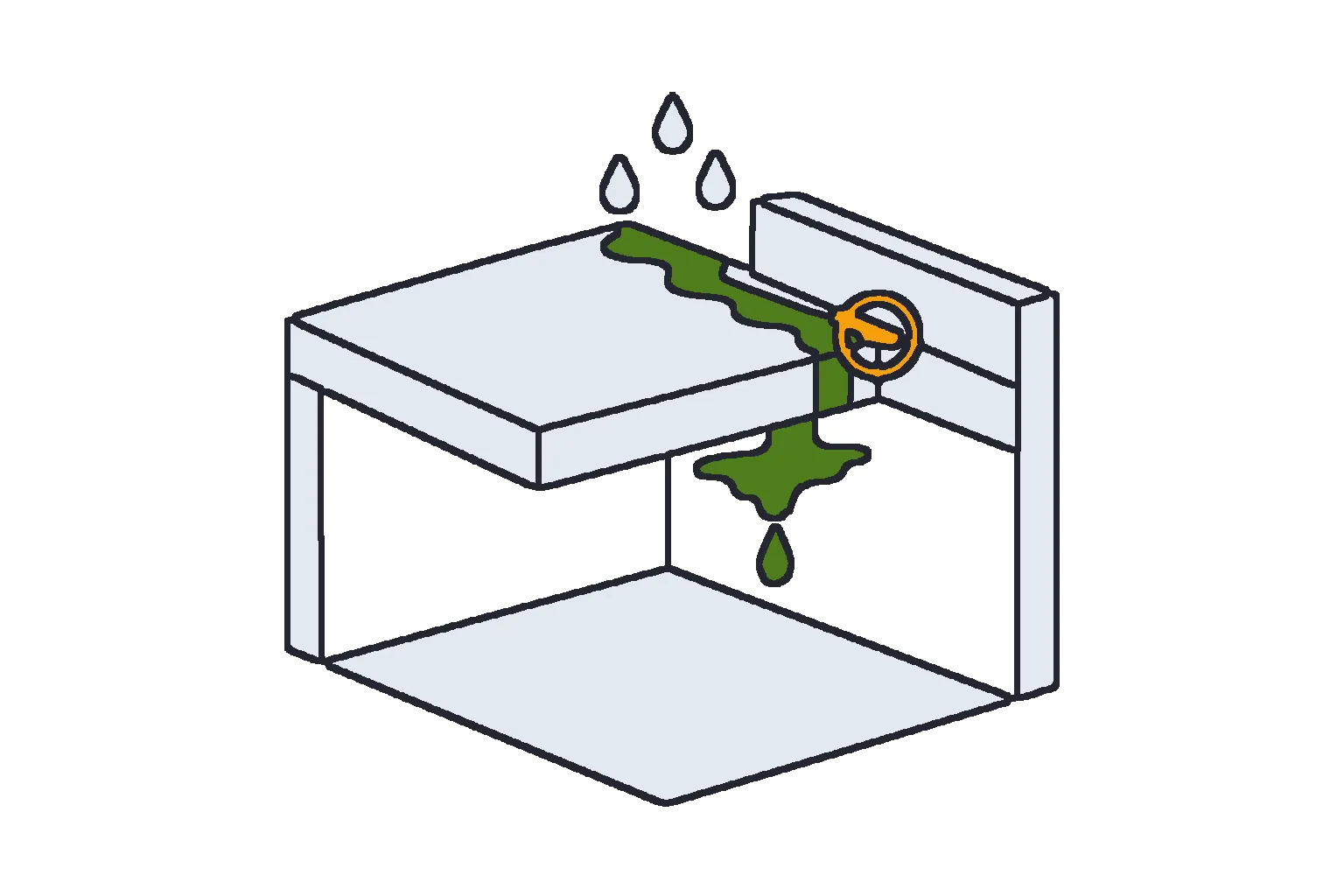
Building enclosures and terraces
Observe junctions, drains, finishing and previous works. Distinguish blocked drainage, discontinuous waterproofing and entry elsewhere. A puddle can indicate performance, but does not itself establish the entire cause. Do not improvise flooding to reproduce damage or climb onto an unsafe roof. A watertightness test needs a procedure and control.
Water supply and drainage networks
A leak may relate to supply or drainage. Request available plans and the repairer’s document; test only under suitable conditions and with appropriate personnel. No visible pressure drop during a brief check does not establish every section’s condition. Opening a wall requires defining purpose, authorisation and reinstatement. For urgent repairs, record the location and component found.
A renovated bathroom may have a waterproofing, junction or pipe problem. New surface sealing can correct one route or conceal a symptom without repairing other layers. Request an explanation of the solution. If a neighbour is affected, document both properties and coordinate access to avoid incompatible repairs.
Do not attribute every storm-related ingress to insurance or an extraordinary risk. Cover depends on the event, policy and conditions. If claim notification is appropriate, act promptly and retain the file. Insurance may address consequences under its terms without resolving a maintenance obligation or workmanship defect.
With simultaneous causes, the report must explain what could be distinguished. Resolving a pipe leak can improve an area that also had condensation. Development after intervention helps, but must be interpreted under comparable conditions. A partial result does not prove every initial hypothesis wrong or the entire problem resolved.
Who maintains, repairs or compensates: separate the questions
If the source is a common element, the community may have maintenance duties under the applicable rules. Exclusive use by one owner does not automatically determine ownership. Consult the ownership title, statutes and history. Component maintenance and liability for causing damage can fall differently; a private alteration also needs examination.
For rentals, the LAU (Ley de Arrendamientos Urbanos, Spanish Urban Lettings Law) distinguishes necessary repairs and small works through ordinary wear, alongside specific rules for the regime. Do not assign every mould issue to the tenant or every damage item to the landlord without assessing cause. Notify promptly and facilitate coordinated access. Rent or deposit deductions require reviewing requirements rather than deciding solely from a photograph.
For new builds, habitability damage may fall within the LOE (Ley de Ordenación de la Edificación, Spanish Building Law) if scope, dates and cause align. Its periods start from works acceptance on the legal terms. Damp may involve later maintenance or alteration, so not every stain automatically activates a guarantee. Retain acceptance, appearance and intervention dates.
After a resale purchase, saneamiento (seller liability for defects) may be assessed if concealment, pre-existence and relevance requirements are met. The six months under article 1490 run from delivery and need immediate advice. Do not wait for the wall to dry before reviewing the route. Other actions are not an automatic extension.
Insurance and liability
The policy determines risks, exclusions, sums insured and terms. A payment offer does not itself prove another owner’s liability, and a rejection does not establish that no legal remedy exists. Request the cause and conditions in writing. Separate technical cost and cover; the expert can assess necessary work without asserting everything must be compensated.
| Question | What to review |
|---|---|
| Maintenance | Ownership and rules for the element |
| Damage cause | Evidence and interventions |
| Contractual claim | Agreement, parties and dates |
| Cover | Policy and reason for the response |
| Amount | Quantities and necessary repair |
Consult the owners and communities legislation and insurance legislation. Answering who pays requires coordinating those questions rather than choosing the recipient from the stain’s location.
Define the solution, drying and verification before closing
A useful proposal identifies a sufficiently established cause, corrective works and reinstatement of consequences. Ask what will happen at the source and finishes, with access, materials and controls. If information is missing, propose checking before finalising price or solution. Do not accept a universal treatment that does not explain its target mechanism.
Repair sequence
- Record condition and protect against risks.
- Assess water input and diagnostic limitations.
- Define intervention and necessary authorisations.
- Document works, particularly layers concealed again afterwards.
- Allow drying and check conditions before reinstatement.
- Verify operation and maintain follow-up where appropriate.
There is no universal drying period for every wall. It depends on materials, water input, conditions and solution. Do not promise paint will be ready after a fixed number of days without checking. Some salts can influence apparent moisture and restoration of finishes; finish compatibility must be assessed.
Keep process photographs and repairer documents. If the solution changes on opening, record the discovery and reason. A final invoice may not show completed layers; request sufficient description and agreed controls. If a community is involved, coordinate the file and verification with its representative.
Verification must answer the initial problem. A pipe leak may need installation tests; rain may need observation under relevant conditions; condensation may need monitoring of indoor conditions and surfaces. A freshly painted wall is insufficient. Identify what was checked and which behaviour still needs observing.
For a claim, separate initial damage, urgent repair, necessary cost and chosen improvement. Do not add two quotations containing the same demolition or include whole-home renewal unrelated to the cause. The assessment must allow a proportionate solution and explain uncertainties.
Maintain records after correction. If symptoms recur, use the same points and describe conditions without immediately asserting the work was useless or the cause different. Organised monitoring allows study of results, new water input and adjustments. Technical closure must reflect observations and limitations, and the legal agreement must be reviewed before accepting general waivers.
Common mistakes
Buying paint or treatment before diagnosis. Ask which water input it aims to correct. Covering symptoms can conceal development and delay a suitable solution.
Diagnosing by height or colour. Relate pattern, materials, conditions and history. Rising damp, pipe leaks and lateral penetration can look similar.
Reading every figure as the wall’s actual moisture percentage. Method and substrate matter. Record points and conditions and request interpretation of comparative readings.
Blaming the occupier on seeing mould. Assess ventilation, insulation and use. Factors can coexist without one established cause.
Confusing insurance payment with a resolved cause. Check what is compensated and which intervention removes the water input. Painting or compensation does not guarantee performance.
Closing after a dry visit. State conditions and necessary monitoring. Intermittent penetration may require observation or an additional controlled test.
When you need an expert
Technical assessment is useful when damp recurs, affects several properties or there are disagreements over source and repair. The report must relate measurements, patterns and documents, distinguishing hypotheses and conclusions. It may require access to other spaces or specific authorised tests; an ordinary inspection does not automatically verify every concealed layer.
Verify Home Inspector can consider a construction defects assessment where damp requires analysis of workmanship, source and solution, or a damage valuation to justify repairs. When requesting a quote, give municipality, affected rooms and access to the roof, neighbouring home or suspected installation. Attach dated photographs, previous repairs and community or insurance communications. Consult the construction defects frequently asked questions to define necessary documents and checks.
Frequently asked questions
How do I compare measurements before and after repair?
Use identified points and a comparable method, recording conditions, material and dates. Do not mix equipment readings or scales without interpretation. Development can support monitoring, but drying alone does not establish permanent elimination of water input. Ask the report to explain valid comparisons and behaviour needing additional observation.
What if two rooms have different damp patterns?
Record each area separately. The same water input may follow different routes, or simultaneous causes may exist. Do not impose one solution for convenience. The assessment must relate locations, conditions and history and explain what could be confirmed. Keep numbering and individual monitoring to check each intervention’s effect.
Can the quotation separate diagnosis and repair?
Yes, which can help when the source is insufficiently established. The first phase must define what it checks and which result allows selection of a solution. Work and reinstatement are then assessed using data. Avoid accepting a fixed sum for generic treatment if nobody explains its hypothesis or what happens if testing changes the diagnosis.
What document should I request after an urgent pipe repair?
Request location, discovered cause, component affected, works and checks performed, alongside the invoice and safe photographs. Identify removed items and whether they could be retained. This helps assess source and cost when initial condition can no longer be examined. Distinguish the repairer’s direct findings from the expert’s later conclusions.
Want to inspect a home?
We inspect it and provide a report with photographs, severity and repair costs.
Contact
Let's talk about your property
Call us, message us on WhatsApp or send us an email. If you already know what you need, the quote form is the quickest way.